UKGC's Tim Miller; recent speech dissected
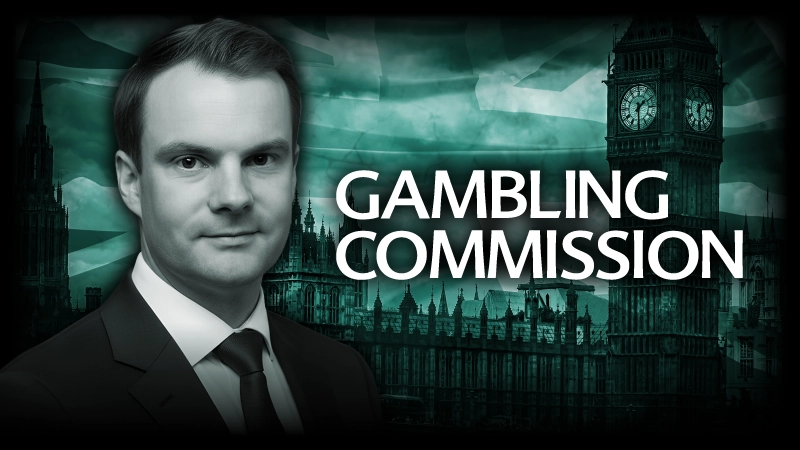

The Gambling Commission’s (UKGC) Executive Director Tim Miller spoke at the Betting and Gaming Council (BGC) Annual General Meeting on 26 February 2026.
The Commission is Britain’s governmental gambling regulator, and the BGC represents British gambling operators. The two organisations work together on many issues, but don’t necessarily always see eye to eye.
This speech marks Miller’s first address since the announcement of CEO Andrew Rhodes impending departure. In it, Miller touches on the leadership change, as well as the November Budget, the Gambling Act Review, the illegal gambling market, the future of crypto payments, and proposed increases in Commission fees.
Rhodes’ departure
The first order of business was to address the absence of Andrew Rhodes, who announced that he would be stepping down from his role as Chief Executive of the Commission at the end of April. Miller paid personal tribute to Rhodes, as well as celebrating his work at the Commission.
Miller looked to reassure any potentially concerned attendees about Rhodes’ departure, citing his own commitment and that of Sarah Gardner, Deputy Chief Executive Officer, to uphold the priorities Rhodes had established. The UKGC’s “Board are already working on the process to appoint an Interim Chief Exec”.
Clearly then the Commission is conscious of possible transitional issues, but the reality is that turbulence is inevitable, and some frictions can be expected in the coming months.
Budget adjustments and black market culpability
The November Budget raised the remote gaming duty significantly, almost doubling it from 21% to 40%. The move was controversial, and negatively impacted the share prices of multiple operators, some of whom also projected major job losses.
This was, and still is, a contentious issue, particularly with the Betting and Gaming Council (BGC), who called the move a “devastating hammer blow”. Chancellor Rachel Reeves claimed that she was targeting remote gambling because it was “associated with the highest levels of harm”. She did not explain why the duty on physical slot machines, which are associated with similar levels of harm, went unchanged.
Miller acknowledged that the Budget “radically changed the outlook for many gambling businesses”, but praised the Treasury for committing an extra £26 million over three years to the Commission itself. These funds are intended to support the UKGC as part of the Illegal Gambling Taskforce, a group of organisations spanning social media, finance and politics.
It could be argued that combating the illegal market is not actually a question of money. Many would suggest that simply affording operators more freedom, and loosening certain controversial regulations, would allow legitimate sites to compete with those that are drawing players to the black market.
Social media promoting illegal gambling
Social media often promotes gambling sites with no concern for whether they are safe and legitimate or not. Miller asserts that, for the fight against the black market to be effective, “social media firms, big tech and affiliates need to make a concerted effort – not just industry and regulators”.
It’s certainly true that collaboration is vital here, and that regulators need to coordinate with social media in particular. Miller noted some progress in this area, stating that he had recently met with Meta (Facebook, Instagram), who have “committed to working with the Commission further in this space”.
Aside from the fact that the focus would be on sites that promote themselves as “not on Gamstop”, few details were given of how this collaboration might practically work. The Commission should have formed these relationships long ago, but Miller did state his intention to hold Meta to these promises, and to progress as quickly as possible.
UKGC fees likely to rise
Miller sounded defensive as he justified the upcoming consultation on the Commission's fees. He made the case that they haven’t been reviewed in five years, and pointed out that the aforementioned £26 million is the only taxpayer funding they receive.
These fees, for things like applications and licences, apply to operators, and are calculated as a percentage of the company’s gross gambling yield. With the aggressive tax raid still ringing in the ears of the BGC and its members, the notion of increased fees is unlikely to receive a warm welcome.
The Department for Culture, Media and Sport will review the fees, as the Commission doesn’t have the power to adjust them itself (unlike many of its counterparts). The consultation runs until 29 March, and the operators who attended the BGC’s meeting are likely to want to submit responses. It seems safe to assume that a small increase in fees is on the way.
End in sight for the Gambling Act Review?
Miller said, “we are hopefully approaching the end of the Commission’s role in implementing the Gambling Act Review”, and stressed the significance of evaluation moving ahead. He also highlighted the importance of there being a definite end to the process, avoiding an “an endless treadmill of reform”, and, labouring the metaphor, “expending a lot of energy just to go nowhere”.
The idea of the turbulent White Paper Review period coming to some sort of a close will likely appeal to the BGC and its members. Miller even teased a “period of some regulatory stability”.
Even so, with the struggle against the black market only really just beginning, it’s hard to imagine things slowing down much. Also, the brutality of the Budget is likely to dampen any good news for operators.
Over-regulation not to blame?
Turning his attention to the question of “what encourages people to move to the illegal market”, Miller suggested that international regulators look upon the British gambling market with envy. It’s certainly true that the British gambling industry is one of the most productive whilst also being one of the most strictly regulated.
Miller rejects the idea that “recent regulatory changes have been one of the top drivers to the illegal market” and states that UKGC research doesn’t support this. However, he doesn’t offer up any specifics about this research, or comment on the patterns of over-regulation and illegal gambling in other countries. Miller’s assertion comes without any support whatsoever, and there are likely to be many BGC members who feel that such a claim – which is contrary to patterns consistently seen all over the world – requires evidence. It’s not clear what “the top drivers” actually are, and this statement feels like precision-engineered avoidance.
Miller then said that the increase in fees might allow the Commission the breathing room to “review the impact, efficiency and burden of current regulatory requirements”. Although vague, this may even hint at a possible readjustment of recent regulations, perhaps relating to background checks and stake limits. The UKGC won’t backpedal too quickly on this for fear of losing face, but Miller’s comment might suggest some relaxations in the near future.
The crypto situation
The Financial Services and Markets Act 2000 (Cryptoassets) Regulations 2025 proposal was put to Parliament in December, and is expected to come into play on 25 October 2027. This will likely lead to authorised casinos being able to trade using cryptocurrencies.
The Commission had previously shied away from the whole crypto thing, but long term, they couldn’t continue to ignore it. It will be difficult for the UKGC and wider Government to regulate and monitor crypto trading, but this is a positive and progressive move. One advantage is that it gives legitimate operators a chance of competing with the unlicensed crypto-specific sites that so many players favour.
Summary
For the whole industry, there are undeniable positives to be gleaned from the speech. Miller says that compliance levels have improved dramatically in the past 10 years, and that the worst of the non-compliance era is now over. His statements generally represent a desire for responsible regulation without stifling the industry’s ability to innovate or trade profitably.
But actions speak louder than words, and not everything that was said necessarily holds up. The UKGC has not shared the research that suggests its over-regulation is not to blame for the rise in illegal gambling, and it’s been caught withholding research in the past. Also, lobbying for an increase in fees so soon after Reeves’ tax raid on operators feels tactless.
Despite Miller’s placatory words, we forecast more turbulence ahead.