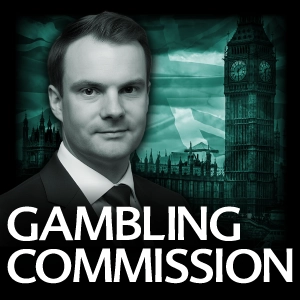
UKGC CEO Rhodes to quit


After 5 years the Gambling Commission’s Andrew Rhodes has announced he will step down as CEO on 30 April, 2026. Let’s take a look back at what’s been achieved over those years.
Rhodes at the UKGC; the verdict
Rhodes guided the Gambling Commission (UKGC) through a period of huge change, quipping that his time had ‘never, ever been dull’. He’s not wrong!
Overseeing the implementation of the White Paper was one of the biggest changes the regulated UK gambling market has ever seen. The White Paper wasn’t without its critics – affordability checks certainly proved divisive, as did capping slot stakes. But, the introduction of a mandatory levy on GGY (Gross Gambling Yield) was received well, raising funds to help support those suffering from gambling related harm.
It’s true that you can’t do great things without ruffling a few feathers and Rhodes’ time at the UKGC was proof of that. He spearheaded campaigns for bold change that will have a lasting impact for the UK gambling industry.
Charles Counsell, Interim Chair of the Gambling Commission, commented on Rhodes’ ‘outstanding leadership’ and ‘strong legacy’, while Grainne Hurst, CEO of the BGC (Betting & Gaming Council) praised his ‘hands-on approach and willingness to engage directly with the industry’.
For me, Grainne Hurst hits the nail on the head. Rhodes was a brilliant communicator who took into account opinions from all angles of the industry, to create meaningful change, rather than just favourable headlines.
Key initiatives during Rhodes’ tenure
Rhodes’ time at the UKGC was a period of sweeping reform. Big changes happened and it’s a bit of a shame he won’t get to see out the results for many of them. Here are some of the landmark initiatives of Rhodes’ tenure.
Affordability Checks
Back in August 2024, one of the most significant changes under Andrew Rhodes’ leadership began – the introduction of affordability checks. Starting when net deposits hit £150 over 30 days, these checks were regularly called ‘frictionless’, but felt far from frictionless in the press – and apparently a little further still for some players.
Stake limits for online slots
From September 2024, a maximum of a £5 stake per spin was introduced at UK slot sites, with a lower cap of £2 for adults between the ages of 18 and 24. These limits were chosen to reflect differences in risk profiles and were a core recommendation from the White Paper.
UK Gambling Survey for Great Britain (GSGB)
Under Rhodes’ tenure the Gambling Participation Survey was replaced by the Gambling Survey for Great Britain (GSGB). The intention was to create a larger, more robust base of evidence on gambling participation and harm. The first was published in July 2024 and the second in October 2025, shining a light on evolving player behaviours.
Fighting the black market
One of the areas that Rhodes committed to challenging was the black market. It’s been a priority of the UKGC for Rhodes, whose time as CEO saw big steps made.
In September 2025, the UKGC published the first in a series of reports on illegal online gambling, focusing on consumer behaviour, motivations and engagement with unlicensed operators. There were three more reports after this, each shedding light on an area of the industry that had been difficult to understand and even more difficult to quantify.
Rhodes’ work towards understanding the illegal market is arguably yet to be truly pivotal, but building a foundation of understanding will surely help make real change possible under future leadership.
Wagering requirements capped and promotional rule changes
In January 2026 the UKGC introduced a cap of 10x on wagering requirements for UKGC-licensed casinos. For players this feels like an instant win – no more getting stuck on never-ending wagering requirements, but for operators it’s a little more nuanced. Competing with the black market for bonus value looks a little harder, but this early on, it’s maybe too soon to tell. This will be one to watch.
Customer’s Choice
Putting consumers in charge of their own experience is something else that the Commission has done particularly well lately. From introducing a requirement for operators to let players choose which types of gambling marketing material they receive, to being encouraged to set a deposit limit as soon as they sign up to a new site.
Gambling Commission
With Rhodes stepping down, the next CEO inherits a regulator in the middle of implementation rather than overhaul – arguably a nicer, more manageable task than that handed to Rhodes. Some of the most divisive changes are already bedding in and the plethora of information now available on the black market should make it easier to hit unlicensed sites where it hurts.
The next phase will naturally feature some reform, but ought to be more about finally measuring outcomes from the last five years, as opposed to implementing once-in-a-lifetime changes.