
UKGC CEO Rhodes; recent speech dissected
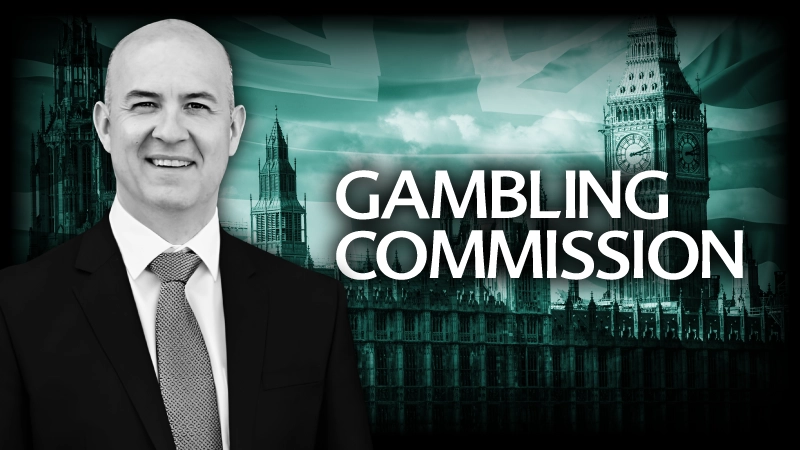

On 20 October 2025, Andrew Rhodes, CEO of the UK Gambling Commission (UKGC) addressed members of the International Association of Gaming Regulators (IAGR) in Toronto.
Rhodes provided various broad, general updates, including on the current state of the British gambling market, pressures from AI and crypto, and efforts to curb the rise of illegal gambling.
Here, we’ll examine his keynote speech and glean what we can from below the surface.
Things happen first in Britain?
Rhodes kicked off his speech by suggesting that “a lot of what happens in the world, given the maturity of the GB market, tends to happen with us first, and it follows everywhere else”.
This statement is problematic. While it may once have been the case, other markets have since reached comparable maturity. Other regulators have proven to be more proactive than the UKGC, which frequently seems to get bogged down in its own bureaucracy. In some areas, such as increased illegal gambling, the UK actually appears to be behind the curve.
Perhaps Rhodes genuinely believes that the Commission is leading on the front foot, or perhaps this opener was intended as a way to get his audience to lean in, to add more weight to his speech.
Shape of UK market
Throughout his speech, Rhodes refers to the “latest wave of the Gambling Survey for Great Britain” (GSGB). Explaining the current situation in the UK, he cited various well-established statistics, including that around 48% of UK adults gamble.
The UK market is worth £15.6billion, with £4.1 billion of that being lotteries. Excluding lotteries, remote and online gambling makes up 60% of the market.
Safer gambling & AI
Rhodes outlined some of the transitions that the industry has undergone in recent years, with communications gradually opening up between operators and players.
Regarding safer gambling interactions, Rhodes said “what we've seen in the last 12 months or so is operators increasingly now using generative AI, and they're doing so to try and improve the consistency of customer interactions”.
This will raise a few eyebrows. It can take courage for problem gamblers to reach out for help, and the idea that AI should be the first thing they encounter seems odd. AI makes many mistakes, and can not necessarily interpret the nuances of human interaction. Perhaps, if someone is seeking help, one of the things that they actually need is to feel heard by another human.
No progress on crypto
The UKGC doesn’t allow licensed operators to accept cryptocurrencies. This is something that hasn’t been commented on much recently, and the reason for this appears to be that the UKGC finds it “difficult to see how we would license those who are offering crypto casinos”.
However, Rhodes acknowledged the massive popularity of crypto in the illegal market, and the increasing popularity of it among young people. At least the Commission has an eye on this issue.
This is a tricky situation to navigate. Rhodes rightly highlights the problems of licensing a crypto casino, including “traceability of funds, AML risks, terrorist financing” and more. But the longer the UKGC takes to come up with a solution to the crypto situation, the bigger the slice of the market that crypto casinos will take.
Illegal gambling
Inevitably, the topic of illegal gambling was broached. Rhodes didn’t spend long on this, but he did pinpoint one of the central issues: “There has to be a reason to want to be in the legitimate market.”
This is a war to be fought on two fronts. Taking down illegal operators is one thing, but it’s equally important that the legitimate market remains competitive.
Rhodes did mention something that hasn’t been discussed much, but could prove to be a powerful weapon in the war on illegal gambling: “penalties and disincentives for being in the illegal market”. No specifics were given.
Again, Rhodes made references to recently published and soon-to-be published reports on illegal gambling, but made no concrete promises of action.
Withdrawals
A surprisingly large portion of Rhodes’ speech was then dedicated to withdrawal processes, including a lengthy anecdote about how easy it is to trace parcels. Apparently, issues relating to withdrawing is one of the main areas of complaint, despite the fact that “only 0.1 per cent [of withdrawals] took more than 48 hours [to process]”.
Players do want their winnings quickly, and this is important, but 99.9% of requests are processed within 48 hours, including 96.3% being processed automatically. Rhodes declared that “we've been measuring this and we've been tracking it”, but is this really where the Commission’s resources should be spent? It’s an area where things seem to be working quite well.
Account restrictions
In a 12 month period, “something like 1-2 per cent of people who are gambling had their account restricted,” according to Rhodes. Most restrictions were forms of stake factoring, which is when the operator places a maximum wager limit on the player’s account (often 0.1% of the maximum stake).
Rhodes then went on to illustrate something that many of us saw coming: the direct connection between increased restrictions and illegal gambling. He describes a cohort of players who are “unable to gamble in the way that they want to in certain aspects of the legitimate industry, for commercial reasons, and may be able to do so in the illegal industry”.
“We ought to be concerned about that” says Rhodes, despite the fact that much of the industry has been voicing its concern since before the Commission implemented the regulations that led to these restrictions.
Many accounts are also being banned for simply being considered not profitable by the casinos, “after as few as 5 bets”. As Rhodes mentions, there’s no obligation for a business to trade with an individual unless they’re being excluded on the grounds of “protected characteristics”.
Data & GSGB
The Gambling Survey for Great Britain (GSGB) was mentioned, with Rhodes citing data from the most recent wave and hailing the survey, yet again, as the most comprehensive of its kind.
But he also outlined a project called ROCD (Regular feed of Operator Core Data), which is intended to return data in real time, enabling the Commission to observe consumer behaviour and engineer more effective interventions.
Rhodes states that they’re “not trying to track the individual bets”. Even so, this seems likely to be met with resistance from more privacy-focused players.
Rhodes has often talked about the great size and breadth of the survey, but less about what the data is used for or how it will ultimately benefit players and the broader industry.
Financial Risk Assessments
Rhodes presents the Risk Assessments as a success story, especially the frictionless nature, which has resulted in only 0.1% of accounts meeting any resistance. This number is low, and no doubt things could be worse, but Rhodes appears to be missing the point somewhat…
Players’ concerns, which were well-documented before the introduction of Risk Assessments, were not solely with any ‘friction’ they might encounter. People objected to these checks on principle, because they value their privacy.
Rhodes makes it clear that this concern isn’t shared by the UKGC, stating that the financial data provided “the ability for us to identify them through data”.
Summary
Rhodes wrapped up his speech by urging organisations to work together. “Find something this week, with another regulator that you can work on together that will help us and help you achieve a better outcome.” This is a strong sentiment, and cooperation is key. Hopefully, in this respect, the Commission will put its money where its mouth is.
The UKGC is clearly aware of what its priorities should be: the black market, problem gambling, sensitive regulations, crypto. But it remains characteristically inert. There’s a lot of talk of gathering data and how uniquely informative the Gambling Survey for Great Britain is, but what are they actually doing with it?
The Commission needs to present a proactive plan that targets these key areas while avoiding the same pitfalls that other regulators stumbled into. Until it manages to do this, Rhodes should avoid making suggestions that the UK gambling market is somehow at the forefront – because that’s not how it looks to many of us.