
Compliance, Collaboration and Change; Gambling Commission Update
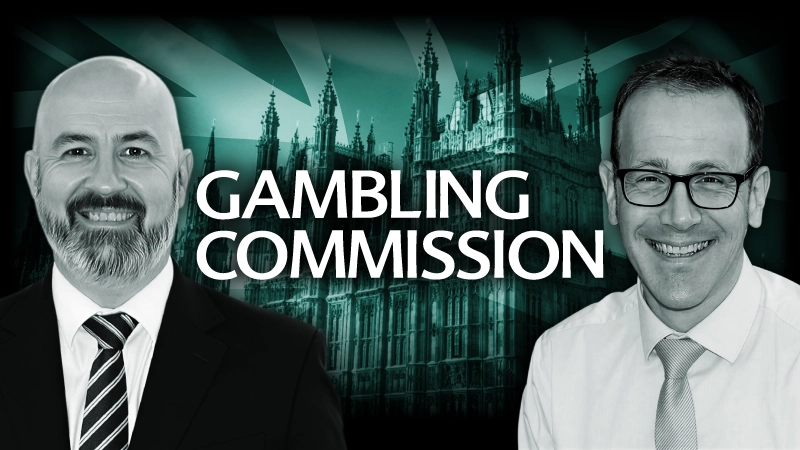

Recent speeches delivered by 2 of the UK Gambling Commission’s leading figures offer some insight on key issues impacting the industry today. Issues covered include levels of compliance, the potential impact of the recent Budget, and the ongoing saga that is the Gambling Act Review.
Here, we’ll be dissecting a speech by Andrew Rhodes, CEO of the UKGC, at the British Amusement Catering Trade Association (Bacta) Annual Convention in November. We’ll also consider a speech given on the same day by UKGC Director of Policy, Ian Angus, at the Institute of Licensing Conference.
Rhodes: Budget implications
Both speeches were delivered the day after the Budget, which broadly focused on raising taxes and curbing inflation. Only Rhodes’ speech addressed the budget, citing “some very significant changes in taxation levels in several areas”.
The Treasury has pledged an additional £26 million over the next three years to help the Commission combat illegal gambling. In recent years, the black market has become a major source of concern, with serious implications for both industry and players.
Rhodes interprets this move as recognition of “the effectiveness of the Commission on illegal gambling”. Putting this into context, Rhodes pointed out that this was a nine-fold increase in funding:
“In my 20 years on executive boards of public bodies I've never known that kind of multiple from the Treasury ever before”.
This is drastic, and it is a reflection of the increasing prevalence of the illegal market. However, the disruption tactics used by the UKGC have a limited impact; because new illegal sites can spring up with ease. Throwing money at them might not be the best move.
It would be possible to sink massive amounts of public funds into fighting against illegal sites without actually getting a single step closer to any sort of long-term solution. While the rising tide of illegal operators must be kept at bay, the Commission should also be looking towards more permanent practical solutions.
GSGB reveals a healthy brick-and-mortar industry
Both Rhodes and Angus dedicate significant portions of their speeches to the brick-and-mortar industry, and to in-person gambling. Both cite new stats from the latest edition of the Gambling Survey for Great Britain (GSGB).
- The 2024-25 Gross Gambling Yield was £16.8 billion
- £4.8 billion came from the land-based sector
- There were 8,234 gambling premises in Britain, slightly down from last year
- There were 2,179 licensed gambling operators, also slightly down
The land-based gambling market is relatively stable, contributing significantly to the national coffers and proving that British gambling is far from being a purely digital landscape.
General participation is consistent
GSGB figures also revealed that overall gambling participant rates are stable. The number of UK adults who took part in some form of gambling activity in the four weeks before surveyed is around 48%, which is typical.
Of all participants, 38% were more likely to gamble online, compared to 29% in-person, but these numbers drop to 16% and 18%, respectively, when lottery gambling is removed.
The most commonly reported activity is still playing the National Lottery (31%), followed by charity lotteries (16%), then betting (11%), and slot gaming (5%).
AGCs and councils scolded
Speaking specifically about operators of Adult Gaming Centres (AGCs), Rhodes said “Unfortunately, despite the warnings, some operators weren’t taking their responsibilities seriously.”
The UKGC has suspended the licences of seven AGCs for failing to be part of a self-exclusion scheme. Rhodes warns that further breaches “may result in further regulatory action being taken”.
Local authorities need to do more
Tying into this, Angus’ speech addressed certain local authorities who are failing to carry out sufficient premises investigations. He stated that “there are some local authorities who aren’t as active” as they should be, and that some are failing to fulfil their obligations. As it stands, “roughly a third” failed to “conduct any inspections of gambling premises in their areas”.
Both Rhodes and Angus are right to focus on non-compliance. Operators must adhere to the Commission’s rules, whether they agree with them or not, so that the market can remain fair, competitive and balanced. Equally, local authorities must do their bit towards enforcement efforts.
Gambling Act Review progress
Rhodes and Angus provided updates on the progress of implementing the Gambling Act Review, which has been ongoing since the 2023 White Paper.
Gaming Machine Technical Standards
Consultations on Gaming Machine Technical Standards (GMTS) received more than 1,000 responses, which both Rhodes and Angus suggest points to an engaged industry.
These responses show general support for the proposed overhaul and consolidation of the current 12 standards into a single one. The objective is to offer more clarity for both operators and customers.
New standards
The new standards will include more guidance on responsible gambling messaging, helping the customer to make more informed decisions. This too seems to be well-supported, but has received some pushback because of differences in protocols used by different game machine manufacturers.
It seems likely that the Commission will go ahead with new requirements, including the proposed alerts that state the player’s net position and session time. There may be technical teething problems, but with player wellbeing on the line, these requirements seem fair.
More land-based consultations to come
Consultations are currently being held by the Department for Digital, Culture, Media and Sport (DCMS) on land-based gambling machines, particularly Category D machines, which includes most types of arcade games. It’s expected that the consultations will lead to new requirements in terms of stakes and prizes.
At the same time, the DCMS is consulting on certain licensing definitions. As it stands, certain types of premises, such as those offering bingo and those which are classed as Adult Gaming Centres, are considered the same.
Clearer definitions and a more nuanced licensing system is a move in the right direction, and it’s likely to be welcomed by most.
Collaboration a common theme
Both Rhodes and Angus emphasised the importance of working closely with Bacta members and local authorities. Rhodes mentioned “really positive engagement” and “a very constructive relationship” between the Commission and Bacta.
On behalf of the UKGC, Rhodes stated his intent “To listen, to be open and to communicate exactly what our concerns are and to work constructively with both individuals and trade bodies.”
Angus’ focus was on the role of local authorities as co-regulators. Whereas the UKGC regulates on a national level, local authorities are responsible for much of what happens in their constituencies. He ended his speech by stating that “we at the Commission are looking forward to working together with local authorities in the year ahead”.
Positive mentions of collaboration and communication are a sure fire crowd-pleaser, and with good reason. Ending with these has become a staple of UKGC-drafted speeches.
Summary
There are a few areas where Rhodes’ and Angus’ speeches overlap, especially in the focus on land-based gambling and the emphasis on communication. Neither shares many specifics about the Gambling Act Review or addresses certain concerns about it, instead assuring us that the wheels are still turning and reminding us of the topics currently being consulted on.
One particularly interesting area is the Budget, in which the Treasury assigned significantly more funds to combating illegal gambling than they ever have before. This is both concerning, because it puts into context the scale of the situation, and reassuring, because it shows a willingness to act. Hopefully the Commission will spend these funds wisely, and work towards a sustainable way of controlling and containing the illegal market in the long term.
Both speeches were made just the day after the Budget and while Rhodes touched on the implications of tax changes we should expect a more detailed response from the UKGC in the coming months as those tax increases start to bite.